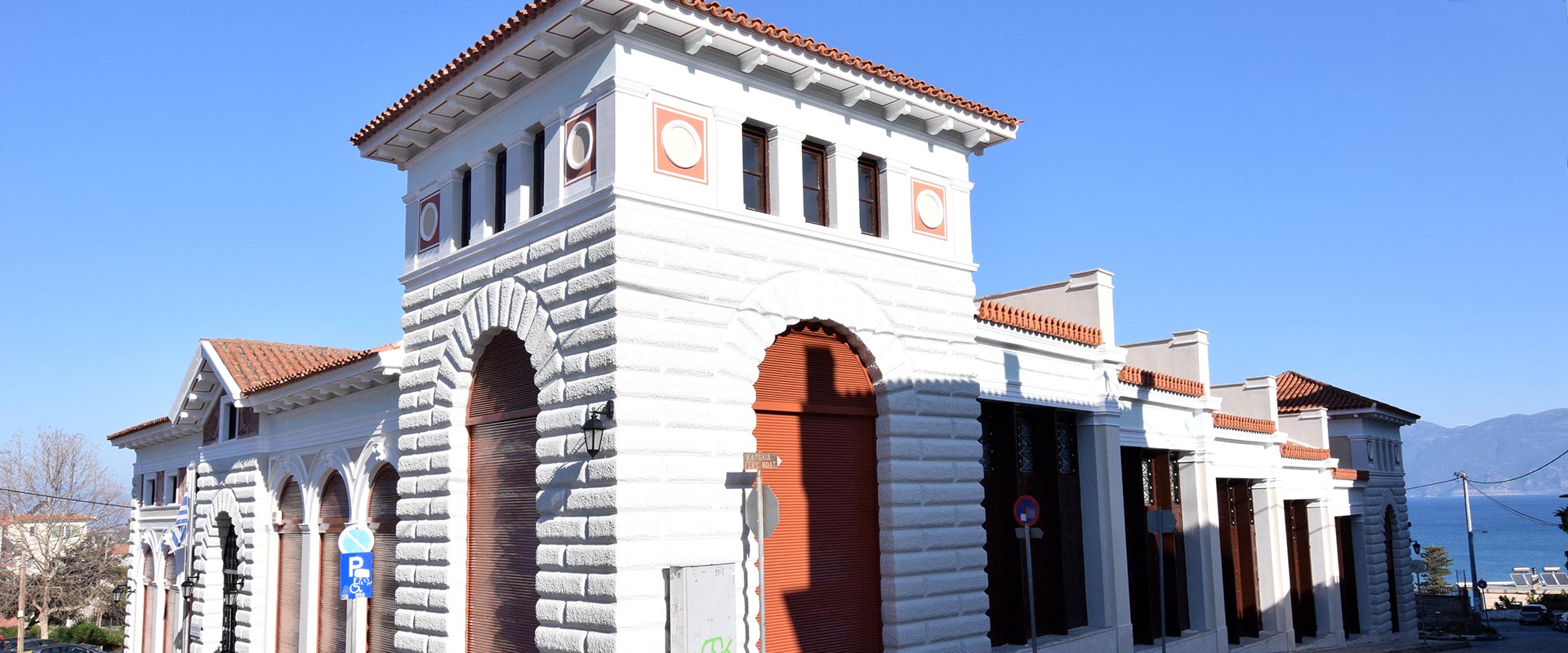
During the era of Kapodistrias, each city had its own market (agora). The most important markets were in Athens, Ermoupoli, Pyrgos and Aigio. The location of the market in each city defined its social position and culture. The floor plan of the markets was pretty much the same: rectangular buildings with centered entrance, a patio in the middle of the building and the shops located along the sides of it.
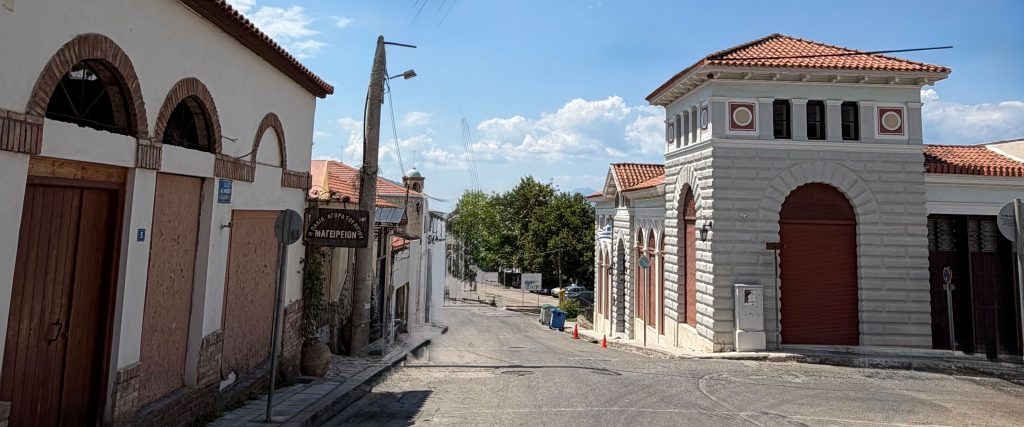
In the 19th century, when the region was in its heyday and the raisin production was high, the German architect Ernst Tsiller built in 1890 the municipal market of Aigio, on a total plot of land of 1960sqm. The design was strict neoclassical and the building was of special beauty. It had two arched gates, wall paintings and many other special features that made it such a great monument. Nowadays, in place there is the Archaeological Museum of Aigio.
The museum has six rooms with findings from the ancient cities of Aigialeia. These findings are dated back in Neolithic and Roman Period. The museum has also a conference room. The first room has got findings from mid- Neolithic Period found in the settlement of Krathis, including vases with engraved decorations, marbled and clayed statuettes, stone tools etc. The second room has many ceramics and tools, findings from the Mycenaean Period.
The third room contains objects from the Geometrical Period and burial ensembles. Displays from the Archaic Period can be found in the fourth room. There one can see the first coin that was used for the trading of goods. Very impressive is also the golden hoop with the bay leaves on it.
Lastly, the fifth room has got findings from burial procedures and also the enormous statue of (probably) Zeus, which is 1,82m high and found in Aigio